*Introduction: Overview of Programming Languages

Programming languages can be categorized into different main groups, each with its unique features and applications. Understanding these categories is essential to comprehend the evolution of programming languages and appreciate their impact on the technological world. Below, the key categories are explained:

1. Machine Code:

Machine code consists of sequences of zeros and ones directly understood by a computer processor. It represents the most fundamental form of programming and is specific to a particular hardware architecture. An example of machine code might look like this: 10110000 01100001.

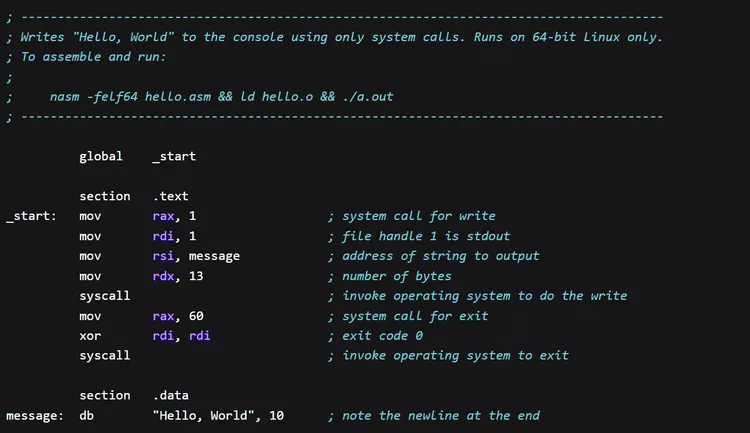
2. Assembly Languages (Assembly):

Assembly languages are successors to machine code and provide a more human-readable form of programming. These languages translate symbolic instructions into the corresponding machine language. An example of assembly code could look like this:
3. High-Level Programming Languages:

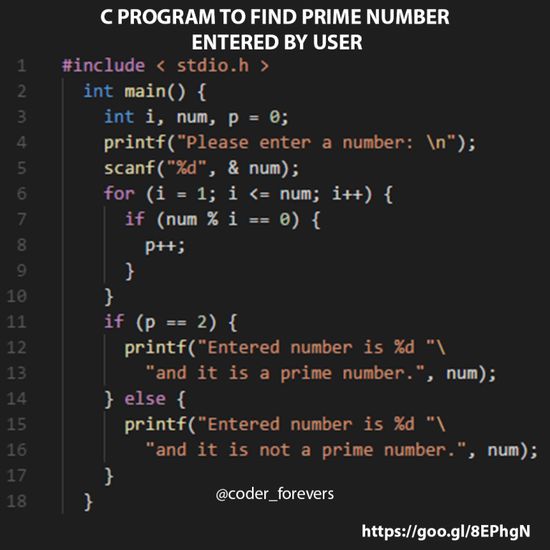
High-level programming languages, such as C, Java, and Python, are designed to reduce the complexity of programming. They use readable syntax and provide abstraction from the underlying hardware. Here's an example of a simple program in C:
4. Fourth-Generation Languages (4GL):

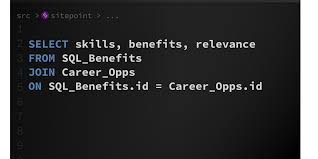
Fourth-generation languages are specialized languages designed for specific tasks, like SQL for databases and MATLAB for scientific calculations. They enable users to accomplish complex operations with minimal code. An example SQL query might look like this:
5. Object-Oriented Languages:

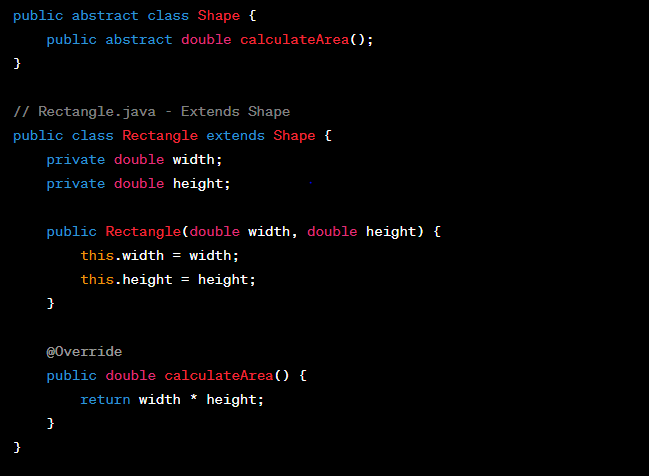
Object-oriented languages, such as C++ and Java, organize data into objects containing both data and associated functions. This approach promotes reusability and modularity in the code. Here's an example of a class in Java:
main categories represent the evolution of programming languages, each with its advantages and applications. In the following sections, we will explore some of the most influential programming languages within these categories and discuss their contributions to the world of computer science.

1954

FORTRAN

Name of the Programming Language: Fortran (FORmula TRANslation).
Developer(s): IBM (designed by John Backus)

    Specific Features:
  • Fortran is one of the oldest programming languages still in use.
  • It is designed for scientific and engineering calculations, especially in situations where efficiency and speed are crucial.
  • It uses a simple syntax, making it easy to perform complex mathematical operations.

COBOL

Name of the Programming Language: COBOL (COmmon Business-Oriented Language).
Developer(s): COBOL standardization was led by a committee of technicians from various companies and government entities. Grace Hopper played a significant role in COBOL's development.

    Specific Features:
  • COBOL is designed for business, finance, and administrative systems.
  • It emphasizes readability and simplicity, with a clear syntax that resembles natural language.
  • COBOL has built-in support for processing text files and tables, making it ideal for data processing tasks.

1959
1964

BASIC

Programming Language Name: BASIC (Beginner's All-purpose Symbolic Instruction Code).
Developers: John G. Kemeny and Thomas E. Kurtz developed the original BASIC language at Dartmouth College in 1964.

    Specific Features:
  • BASIC is designed for beginners and aims to be simple and easy to understand, making it an excellent choice for people new to programming.
  • It has straightforward syntax, allowing users to write programs quickly with minimal complexity.
  • BASIC is an interpreted language, meaning that the source code is executed line by line, making it easy to debug and test code interactively.

C Programming Language

Programming Language Name: C.
Developers: C was developed by Dennis Ritchie at Bell Labs in the early 1970s. It was based on the B language developed by Ken Thompson.

    Specific Features:
  • Efficiency: C allows for low-level memory manipulation and provides direct access to memory addresses, making it highly efficient.
  • Portability: C programs can run on different hardware platforms with little or no modification, thanks to its platform-independent nature.
  • Modularity: C supports the use of functions and libraries, allowing developers to write modular and reusable code

1969
1970

PASCAL

Programming Language Name: Pascal.
Developer(s): Pascal was designed by Professor Niklaus Wirth in 1968 and named after the French mathematician and philosopher Blaise Pascal.

    Specific Features:
  • Readability: Pascal emphasizes readability and clarity of code, making it easy to learn and understand, especially for beginners.
  • Structured Programming: Pascal supports structured programming techniques, encouraging the use of procedures, functions, and blocks, promoting modular and maintainable code.
  • Strong Typing: Pascal enforces strong typing, meaning variable types must be explicitly declared, enhancing program reliability by reducing the risk of type-related errors.

C++

Programming Language Name: C++.
Developer(s): C++ was developed by Bjarne Stroustrup at Bell Labs in Murray Hill, New Jersey during the early 1980s.

    Specific Features:
  • Object-Oriented Programming (OOP): C++ supports the principles of OOP, including encapsulation, inheritance, and polymorphism, allowing developers to structure code in a more organized and efficient manner.
  • Low-Level Manipulation: C++ retains the low-level memory manipulation features of C, providing direct access to memory addresses and pointers.
  • Standard Template Library (STL): C++ includes a powerful library called STL, which provides various generic classes and functions, including algorithms, iterators, and containers, simplifying complex data structures and algorithms implementation.

1983
1987

Prel

Programming Language Name: Prel.
Developer(s): Larry wall

    Specific Features:
  • Combines C and UNIX scripting languages like sh, sed, and awk.

PYTHON

Programming Language Name: Python.
Developer(s): Python was created by Guido van Rossum. The development of Python started in the late 1980s, and the first official Python release, Python 0.9.0, came out in February 1991.

    Specific Features:
  • Readability: Python emphasizes code readability and simplicity, using a clean and easy-to-read syntax, which makes it an excellent language for beginners.
  • Versatility: Python is a versatile language used in various fields, including web development, data analysis, artificial intelligence, scientific computing, automation, and more.
  • Dynamically Typed: Python is dynamically typed, meaning you don't need to declare the data type of a variable when you define it. This simplifies the code-writing process.

1991
1993

RUBY

Programming Language Name: Ruby.
Developer(s): Ruby was created by Yukihiro Matsumoto, often simply known as Matz, in the mid-1990s in Japan.

    Specific Features:
  • Object-Oriented: Ruby is a pure object-oriented language. Everything in Ruby is treated as an object, making it highly versatile for object-oriented programming paradigms.
  • Dynamic Typing: Ruby is dynamically typed, meaning you don't have to declare the data type of a variable. The interpreter determines the type of the object at runtime.
  • Clean and Readable Syntax: Ruby's syntax is elegant and easy to read, which promotes developer productivity and happiness. It's often cited as one of Ruby's most significant strengths.

PHP

Programming Language Name: PHP (Hypertext Preprocessor).
Developer(s): PHP was created by Rasmus Lerdorf in 1994. Over the years, it has been further developed and maintained by a large and active community of developers.

    Specific Features:
  • Server-Side Scripting: PHP is a server-side scripting language, meaning it is executed on the server, generating dynamic web pages. This allows developers to create interactive and dynamic websites.
  • Simplicity: PHP has a simple and easy-to-understand syntax, making it accessible to beginners. It integrates seamlessly with HTML, making it popular for web development.
  • Database Integration: PHP provides built-in support for various databases, allowing developers to easily connect to databases like MySQL, PostgreSQL, and SQLite.

1995
1995

JAVA

Programming Language Name: Java.
Developer(s): Java was developed by James Gosling and his team at Sun Microsystems (which was later acquired by Oracle Corporation) in the mid-1990s.

    Specific Features:
  • Object-Oriented: Java is a purely object-oriented programming language. It encourages the use of objects and classes, making it easier to organize and structure code.
  • Platform Independence: Java programs are compiled into bytecode, which can be executed on any Java Virtual Machine (JVM). This "write once, run anywhere" capability allows Java applications to run on different platforms without modification.
  • Strongly Typed: Java enforces strong data typing, requiring explicit declaration of variable types. This helps catch errors during compilation, enhancing the stability of programs.

JAVA SCRIPT

Programming Language Name: JavaScript.
Developer(s): JavaScript was developed by Brendan Eich while he was working at Netscape Communications Corporation. The language was first introduced in 1995 as part of Netscape Navigator web browser.

    Specific Features:
  • Versatility: JavaScript is primarily known as a client-side scripting language for web development, allowing developers to create interactive and dynamic user interfaces within web browsers.
  • Object-Based: JavaScript is object-based, meaning it treats data as objects and allows developers to create and manipulate objects, making it a versatile language for various programming tasks.
  • Event-Driven: JavaScript is often used for event-driven programming, allowing developers to create functions that respond to user interactions like clicks, scrolls, and keyboard input.

1995
2005

RUBY ON RAILS

Programming Language Name: Ruby (Rails is a web application framework written in Ruby).
Developer(s): Rails, also known as Ruby on Rails, was extracted by David Heinemeier Hansson from his work on the project management tool Basecamp at 37signals (now Basecamp). The framework was first released as open-source in July 2004.

    Specific Features:
  • Model-View-Controller (MVC) Architecture: Rails follows the MVC architectural pattern, which separates the application logic into three interconnected components: Model (data and business logic), View (user interface), and Controller (handles user requests and manages the flow of data).
  • Convention over Configuration (CoC): Rails promotes sensible defaults and conventions, reducing the need for configuration files. This convention over configuration approach streamlines development and enhances consistency among Rails projects.
  • Don't Repeat Yourself (DRY) Principle: Rails encourages the DRY principle, aiming to eliminate redundancy by reusing code components. This leads to more maintainable and efficient code.